use cases
Farm Wi-Fi for fields, staff and visitor areas.
A soil reading needs to reach the dashboard. A camera needs to stay connected at the field edge. A restaurant payment needs to finish where the guest is seated. Aura Wireless helps plan farm Wi-Fi around those tasks, using Apogee antennas with suitable radios and network connections across the working property.
Begin with the device list
A camera, soil sensor and handheld can reach the network in different ways. Record each device’s radio or gateway requirements. Antenna coverage helps the compatible network reach the land; it does not convert every farm device into a Wi-Fi client.
Plan around the land
Fields, tree canopies, hills and buildings shape the available radio paths. Include mounting opportunities, crop or seasonal changes and the routes staff follow. A map should show the places where information is needed, along with the terrain between them.
Include the visitor operation
A farm with a restaurant or public events has additional service points. Outdoor payments, maps and schedules may matter as much as field data. Give those activities their own coverage and busy-period requirements within the broader farm plan.
Three Apogees at a 250-acre U-Pick farm
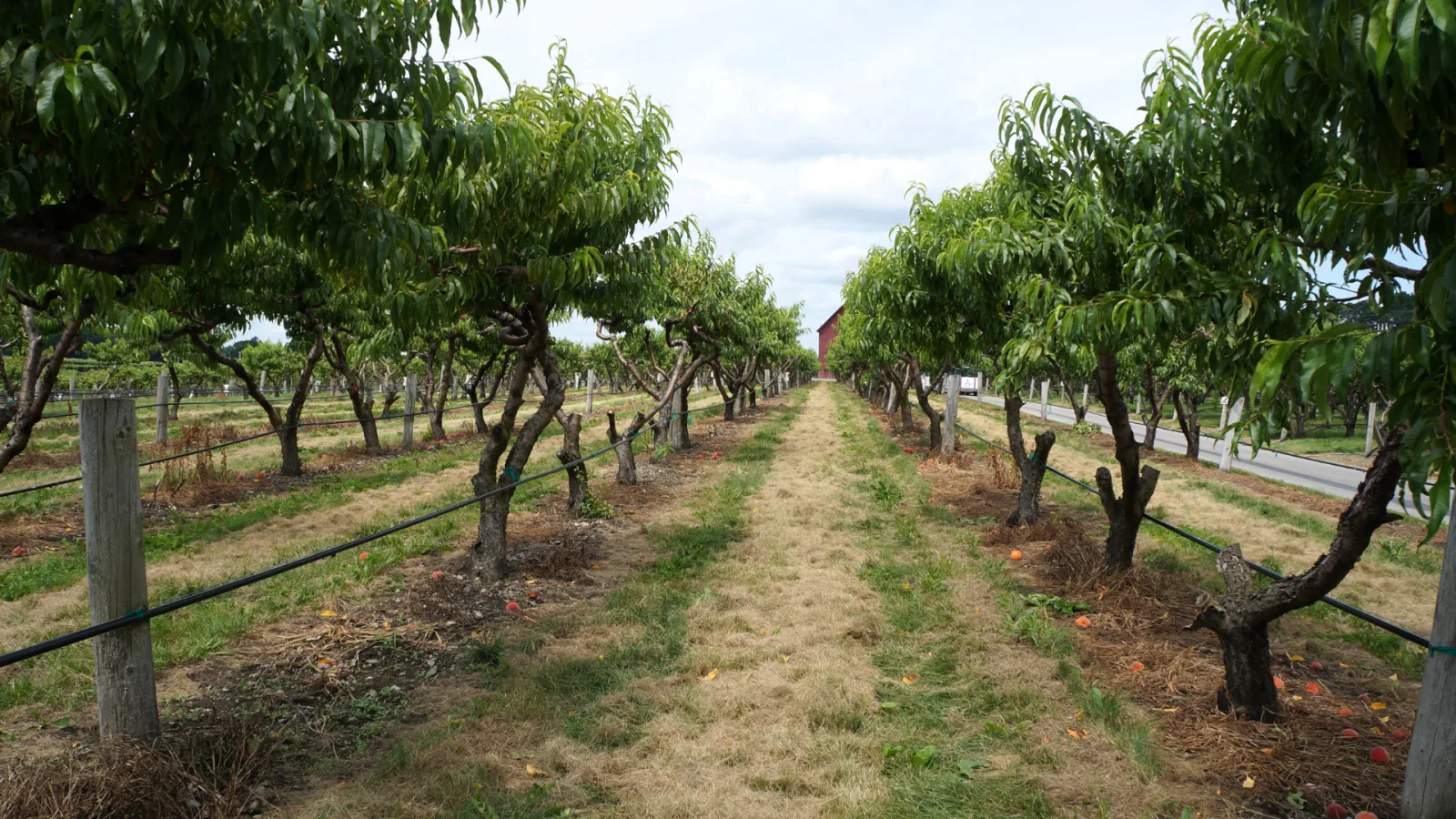
Aura’s U-Pick farm case describes three Apogee antennas extending Wi-Fi across a 250-acre property. Restaurant payment devices, remote cameras, sensor dashboards and visitor information all used the improved connectivity.
Staff could receive soil readings, tank levels and temperature alerts. Restaurant staff could take payments farther outdoors, and the restaurant expanded its outdoor seating. Visitors could reach orchard maps and event schedules. Include agricultural operations and visitor areas in the farm’s coverage assessment.
Read the U-Pick farm caseTwo other deployments, each with its own purpose
Smart Farming at Scale describes a separate 1,000-acre installation using five Apogee 360 antennas for sensor data, drones and worker coordination. Its account connects coverage planning to changing land use and the devices used across the property.
At Prairie View A&M, another 1,000-acre deployment used five Apogee 360s. Cloud Ingenuity worked with Aura on connectivity for the research farm. Students connected from the fields, sensors came online and drones sent high-resolution imagery in real time. These are distinct projects, not a standard acreage rating for the product.
Read the Prairie View A&M caseKeep the network path complete
Apogee’s receive-side design helps the network hear lower-power client signals over the intended area. A suitable access point or radio handles the connection. The upstream network carries data to local systems, dashboards or internet services. Each part has to fit the farm’s equipment and operating requirements.
Compare Apogee 360 where work areas surround a mounting location with Apogee 180 for coverage directed outward from an edge. Review the supported bands, connections, power and installation requirements for the selected model. Locations with no useful upstream network path need that infrastructure addressed as part of the design.
For a business case, list the work affected by current coverage gaps and compare complete installation options. Include mounting, power, network transport and maintenance access across the land. Use the farm’s own costs and requirements when evaluating the investment.
Compare the Apogee familyFarm Wi-Fi questions
Will every farm sensor connect directly through Apogee?
A farm sensor connects through the network supported by its radio or gateway. Apogee provides an antenna contribution to compatible equipment; it does not supply every IoT protocol. Identify sensor models, communication methods and gateways before assigning them to a Wi-Fi coverage plan.
How should terrain and vegetation be included?
Show elevation changes, orchard rows, tree canopies, buildings and possible mounting positions on the site plan. Include seasonal conditions that change the radio path. Modeling evaluates the proposed arrangement, and checks with the intended devices establish performance in the installed environment.
Does farm Wi-Fi still need backhaul?
Farm Wi-Fi needs an upstream network path to reach remote dashboards, internet services or other systems beyond the local radio connection. That path is the backhaul. Its availability and capacity must be considered alongside the antennas, access points and devices.
Can one farm network support operations and visitors?
The U-Pick farm case describes coverage supporting restaurant POS, cameras, sensor dashboards and visitor maps or schedules on the same property. A new project should define the access and traffic requirements of each group and plan the radio and upstream capacity for the intended busy periods.
How can a farm prepare for RF modeling?
Provide a site map, terrain and vegetation information, mounting options and available power and network connections. List the devices or gateways, where they operate and the data they need to send. Include visitor areas and seasonal work zones so the assessment reflects the whole operation.
Continue your site assessment
Plan your farm’s wireless network.
Tell Aura which fields, buildings and visitor spaces need service and which devices they use. Contact us to discuss the coverage requirements, or find an integration partner.