case study | agriculture
Smart Farm Wi-Fi Across 1,000 Acres With Five Apogee 360s
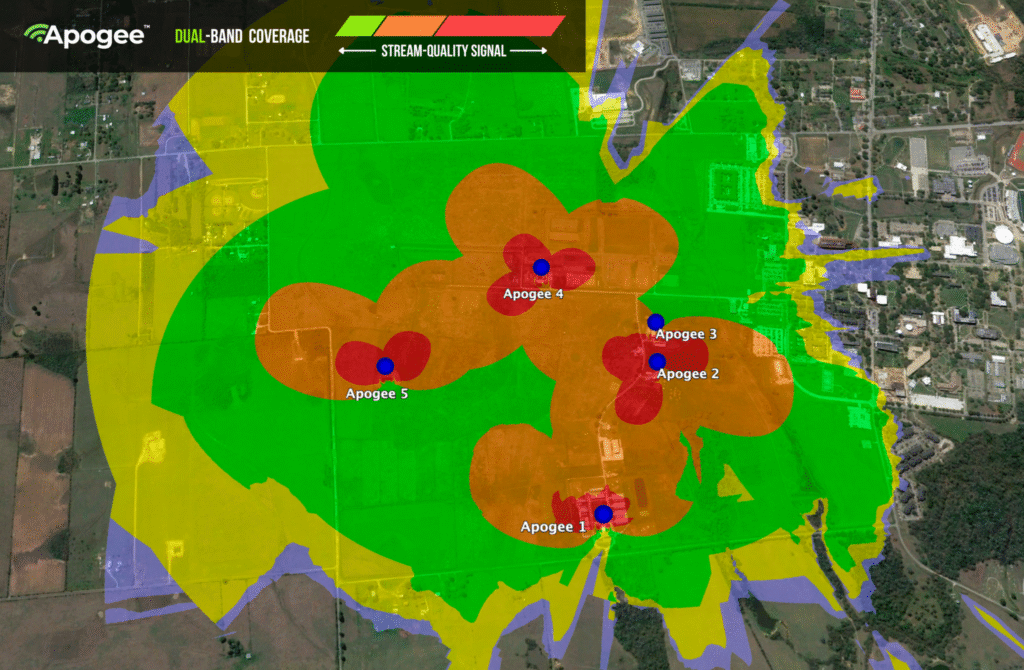
Five Apogee 360 antennas provided smart farm Wi-Fi across 1,000 acres, supporting sensor data, drone connections and worker coordination.
Published
The farm had invested in connected equipment. Sensors monitored soil conditions, drones surveyed fields, and workers carried Wi-Fi-enabled devices. Across 1,000 acres, the network could not keep pace with the work those tools were intended to support.
The challenge was more than reaching a distant field. The farm needed a practical way to connect a large outdoor operation without creating an installation that would be difficult to manage as land use changed.
Aura Wireless deployed five Apogee 360 antennas to provide smart farm Wi-Fi across the property. The source reports that sensors began sending real-time data, drones remained connected between fields, and workers could coordinate through their devices across the farm.
Getting information back from the fields
Connected agriculture depends on information making the trip from the device to the person or system using it. A soil sensor can collect a reading in the field, but staff need that reading to reach their dashboard before it can inform a decision.
The same connection supports different parts of the operation. Workers exchange information while moving between areas. Drones send information from field surveys. Other equipment and tracking systems add their own network requirements.
This farm wanted to use those tools across the full property. The earlier approach raised concerns about the amount of hardware required and the work of maintaining it outdoors. The Apogee deployment gave the team a way to serve the 1,000-acre site with five antennas.
The role of Apogee 360 in smart farm Wi-Fi
The five Apogee 360s contributed the coverage needed to connect devices over the farm’s working area. They operated as part of the wireless network, alongside the radio and upstream components that handle and carry the data.
Apogee’s Asymmetric Gain addresses a problem that becomes important over distance: receiving the reply from a low-power device. A device hearing the network is only half the exchange. The network must also hear the information coming back from the field.
The source also describes the Apogee 360’s configurable coverage as useful when the farm rotated crops and adjusted land use. That provides flexibility within a planned installation. Changes still need to fit the antenna locations, equipment capabilities and coverage requirements of the affected fields.
For a farm evaluating a similar design, the equipment list deserves as much attention as acreage. Wi-Fi clients, sensor gateways, tracking systems and drone equipment can have different connection requirements. The antenna’s coverage role does not establish direct compatibility with every agricultural radio protocol.
What the connection made possible
The reported changes were visible in everyday use. Sensor data could reach staff in real time. Drones could remain connected as they moved from field to field. Workers could coordinate using their Wi-Fi devices throughout the property.
The source describes sensor information being used to guide irrigation and fertilization. It also describes wider use of robotics and tracking systems within the operation. Those applications show why coverage mattered: the farm could put more of its existing technology to work.
The account does not include measured yield gains, water savings or an itemized cost comparison. The result supported here is farm-wide connectivity using five Apogee 360 antennas and the device workflows that connection enabled.
Questions about the 1,000-acre farm deployment
How many antennas served the farm?
Five Apogee 360 antennas served this 1,000-acre farm. That is a site-specific coverage result. It does not mean every 1,000-acre property can use the same antenna count or placement.
What did the farm report after deployment?
The farm reported real-time sensor data, connected drone activity between fields and worker coordination through Wi-Fi-enabled devices. The source describes these operating results without publishing a throughput or uptime measurement.
Could the coverage change as the farm changed?
The source describes Apogee 360 coverage being reconfigured as crop rotation and land use changed. Configuration options depend on the installed equipment and site design; the example does not establish unrestricted coverage changes from fixed antenna locations.
For the underlying connection, read how Apogee works. Aura’s outdoor wireless network solution provides broader context. To plan around your fields and equipment, talk with Aura Wireless about the devices, seasonal uses and coverage areas that matter to your operation.