case study | education
Prairie View A&M Farm Wi-Fi Connects 1,000 Acres
Cloud Ingenuity and Aura used five Apogee 360 antennas for Prairie View A&M farm Wi-Fi across 1,000 acres, connecting fieldwork and research.
Published
Students and researchers at Prairie View A&M University wanted to use smart agriculture in the field. The farm’s plans included soil sensors, livestock tracking, drones, robotics and Wi-Fi-enabled devices for the people working across the property.
The network was a constraint. The farm covered 1,000 acres, and devices could not reliably reach the connection throughout that area. Taking technology into the field meant little if its information could not get back to the people studying and using it.
Prairie View A&M worked with Cloud Ingenuity, an authorized Aura Wireless system integrator. Together with Aura, the team installed five Apogee 360 antennas to extend farm Wi-Fi across the property.
Keeping fieldwork connected to the university’s work
At a university farm, connectivity supports more than daily coordination. Students need access to their devices while learning and experimenting outdoors. Researchers need information from equipment operating across the land. Farm workers need tools they can use away from the buildings.
The source describes the difficulty of meeting those needs through a large number of conventional access-point locations. For the university, the proposed hardware footprint raised questions about both cost and the continuing work of maintaining equipment.
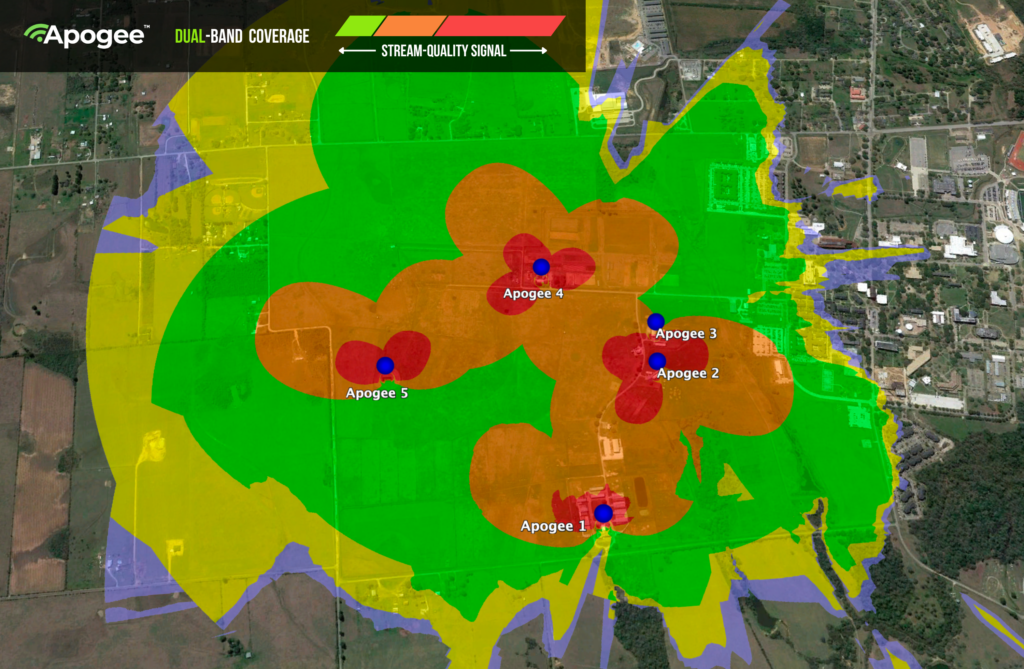
The deployment centered on five Apogee 360 antennas for the 1,000-acre farm. Cloud Ingenuity brought the local integration role, working with Aura on the installation. The aim was to make the network useful across the farm so field activities could proceed where they belonged.
How the Prairie View A&M farm Wi-Fi worked
Apogee contributes antenna coverage to a wireless network. The connected access points or radios handle device connections, while the upstream network carries information to its destination. Five antennas is therefore the coverage equipment count in this account, rather than a complete inventory of the network.
The two-way link matters for farm devices. The network has to receive the information a device sends, as well as send information out to it. Apogee’s receive-side design helps address the challenge of hearing lower-power clients across a larger working area.
A farm also brings several types of equipment into the same discussion. Wi-Fi-enabled devices, sensor systems, livestock tracking and drone equipment do not necessarily use the same communication method. The deployment design has to account for their actual radios and any supporting gateways.
This case reports the use of five Apogee 360 antennas at Prairie View A&M. It does not publish a device-by-device connection diagram or establish that all farm equipment connects directly through Wi-Fi.
Students and researchers could use the connection in the field
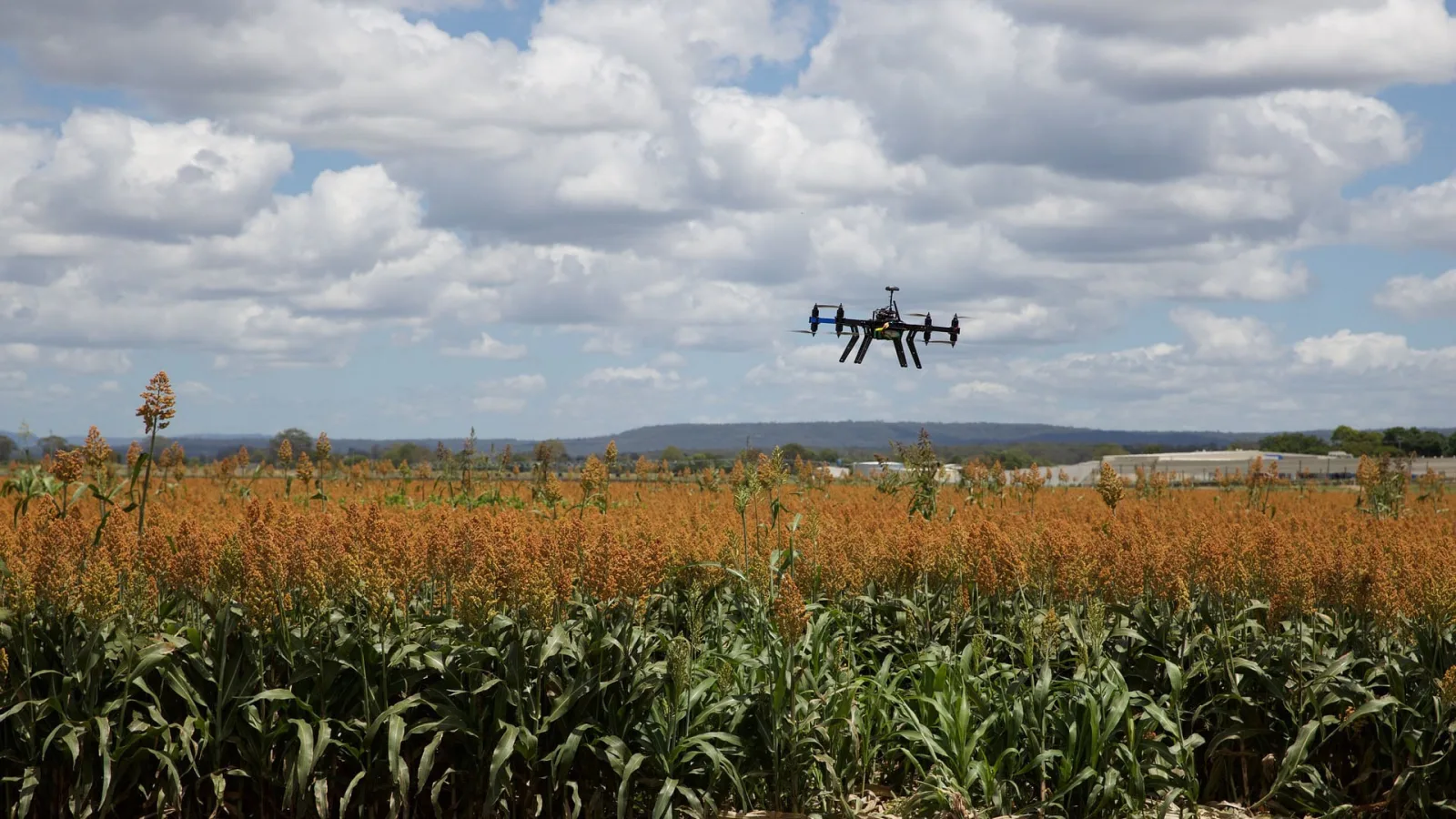
After installation, the source describes sensors coming online and drones sending high-resolution imagery in real time. Students could connect their devices in the fields without walking back to the barns for network access.
For the university, that brought the connection closer to the learning and research. Information gathered outdoors could be available while people were still working there. Faculty gained greater visibility into the farm activity supported by the connected equipment.
The practical result was a working farm network built around five Apogee 360 antennas. The source does not provide a budget breakdown, a measured yield improvement or a published comparison of research output. Its strongest evidence is the coverage footprint and the field activities that became connected.
Questions about the university farm deployment
Who installed the network at Prairie View A&M?
Cloud Ingenuity, an authorized Aura Wireless system integrator, worked with Aura on the Prairie View A&M deployment. The team installed five Apogee 360 antennas for the university’s 1,000-acre farm.
What changed for students working outdoors?
Students could connect Wi-Fi-enabled devices in the fields without returning to the barns for access. The source also reports connected sensors and drones sending high-resolution imagery in real time.
Does the case establish that hundreds of access points were removed?
The case does not document the removal of hundreds of installed access points. Its comparison describes the hardware the source says a conventional approach would have required. The documented Apogee count is five antennas.
Explore how Apogee works and Aura’s outdoor wireless network solution. To assess connectivity for a teaching or research farm, contact Aura Wireless with the field layout, planned activities and equipment that need network access.