use cases
Municipal outdoor Wi-Fi built around public spaces.
A field team needs information while working across town. Residents need a connection in the public areas intended for service. Aura Wireless helps municipalities and local integration partners plan outdoor Wi-Fi coverage with Apogee antennas, beginning with clear service areas, device requirements and responsibility for running the network.
Define the service area
Start with the streets, public spaces and field routes where a connection is needed. Give each zone a purpose and identify the devices expected to use it. A defined footprint makes coverage planning and later field checks more useful.
Name the operating responsibilities
Coverage equipment is part of a service that somebody must operate. Establish who provides backhaul, configures access, maintains the network and responds to faults. Municipal staff, the integrator and service providers need a clear division of that work.
Plan for the busiest use
A quiet street and a public gathering can place different demands on the same network. Include expected active devices and applications in the capacity plan. Antenna reach and the number of simultaneous users are separate design questions.
Ashland: 10 Apogee 360s across 240 acres
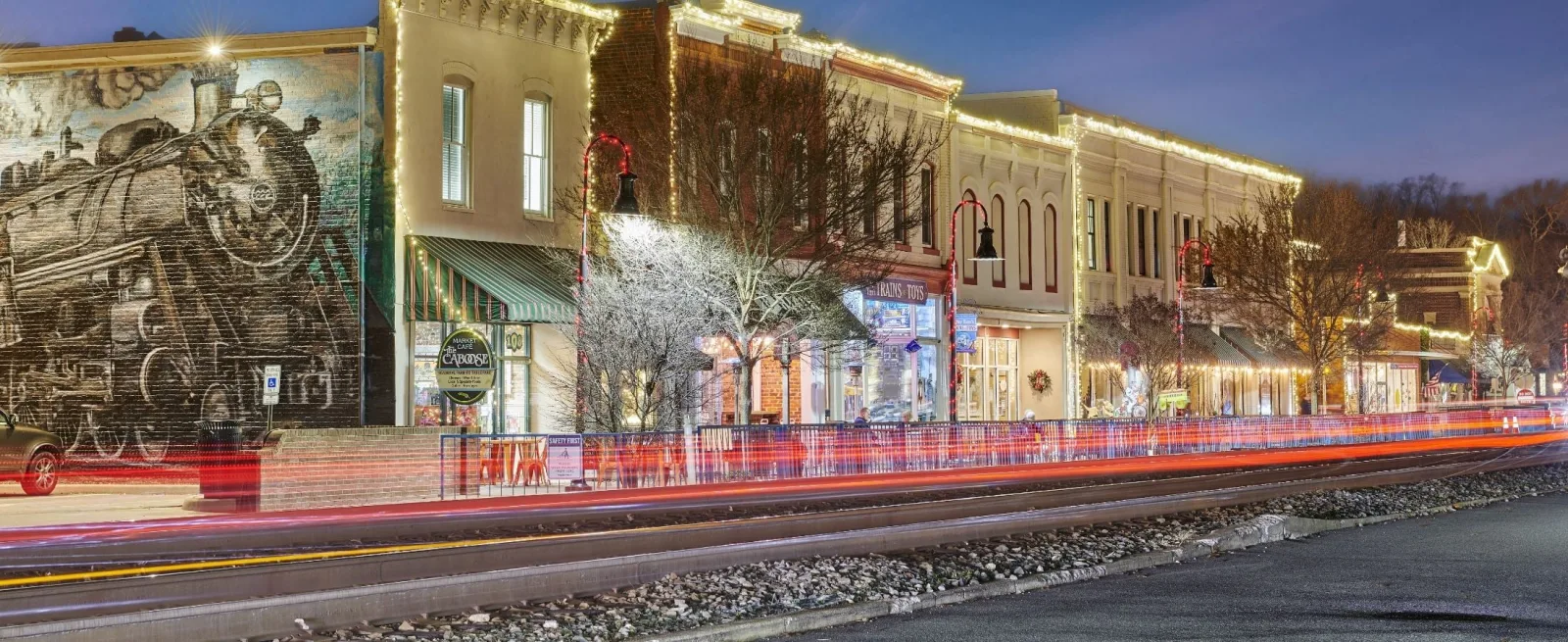
In Ashland, Virginia, Communication Solutions Group worked with Aura to plan coverage across 240 acres in the center of town. The deployment used 10 Apogee 360 antennas. CSG brought its knowledge of Ashland as the town’s established IT partner, while Aura supplied RF design support.
The account reports better information access for field teams and improved resident connectivity. It describes officers connecting more readily, EMS crews retrieving information and fire teams maintaining communication during field activity. Those reported operating improvements give another municipality a concrete starting point for identifying its own needs.
Read the Ashland caseWhat the antenna contributes to the service
Apogee helps the connected radio reach compatible devices across the planned area. Its receive-side design addresses the lower-power return signal from phones and other mobile equipment. The access point still handles Wi-Fi connections, and the upstream network carries traffic to the intended services.
The municipal design also needs access policies, security configuration and capacity planning. These functions belong to the installed network and its operator. Broader coverage does not itself configure a public service or increase an AP’s concurrent-session limit.
Ashland’s account describes Wi-Fi carrying suitable traffic that would otherwise use cellular service. That additional path depends on device access and service configuration. Public-space Wi-Fi should be evaluated alongside the other communications systems a town relies on.
See how Apogee supports two-way coverageBuild the plan with the local partner
Use local knowledge to identify the areas of greatest need, available mounting positions and existing power and backhaul. Buildings, vegetation and street geometry belong in the assessment. Check the devices where staff and residents are expected to use them.
Apogee 360 is a model to evaluate for service areas around a mounting location; Ashland used that model in its project. Apogee 180 offers a different coverage shape for areas directed outward from a suitable edge. Confirm the model, radio interfaces and installation requirements against the proposed design.
Compare the full cost of delivering and operating the agreed service. Include equipment, installation, network transport, maintenance access and ongoing support. Keep the intended coverage footprint and user demand consistent across the options being evaluated.
Explore Aura’s partner channelMunicipal Wi-Fi questions
What does the Ashland deployment demonstrate?
Ashland’s project used 10 Apogee 360 antennas across a defined 240-acre area in the town center. The account reports better access for field teams and residents. The result describes that coverage project, with CSG handling local integration and Aura providing RF design support.
Who should operate a municipal Wi-Fi network?
A municipal project should identify its network operator and integration responsibilities before deployment. Assign ownership of backhaul, access policies, security, maintenance and fault response. In Ashland, the town worked with its established IT partner, CSG, with RF design support from Aura.
How can Wi-Fi provide another path for mobile traffic?
Compatible devices can use Wi-Fi for supported traffic when they have network access and the required service configuration. The Ashland account describes that approach as carrier offload. An Apogee antenna contributes coverage; the complete network and device configuration determine which traffic uses it.
How should public-event demand be considered?
Include the expected device concentration, applications and busy periods when sizing the access points and backhaul. An antenna’s coverage area does not establish simultaneous-user capacity. Check an event’s locations and demand against the operating network before relying on existing coverage.
What should a municipality prepare for a coverage discussion?
Prepare a map of intended service zones, staff routes, device types and current connection gaps. Identify possible mounts, power, backhaul and the team that will operate the service. Those inputs help Aura and the local integrator assess fit and placement.
Continue your site assessment
Discuss your municipal Wi-Fi project.
Bring the service-area map, device requirements and operating responsibilities. Contact Aura to discuss the antenna approach, or find a partner for local integration.