case study | retail
Large-Format Retail Wi-Fi for 20-Acre Outdoor Operations
A retailer adopted two to three Apogee antennas for large-format retail Wi-Fi, connecting curbside, pallet checks and seasonal areas on large properties.
Published
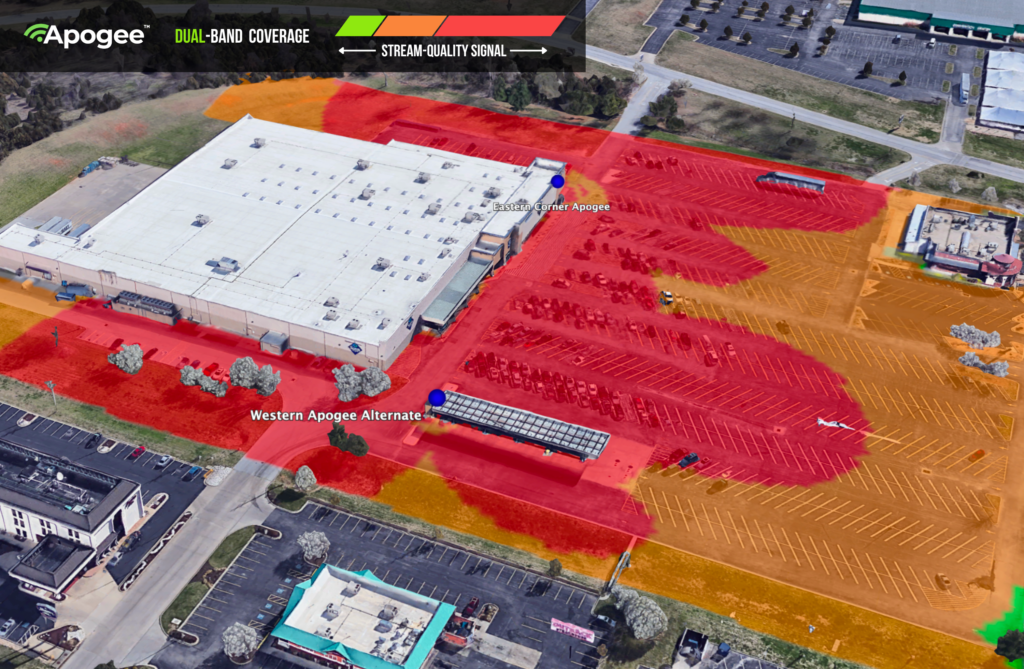
A parking lot becomes part of the store when employees use it for curbside pickup, pallet checks and seasonal sales. At the large-format retailer in this case, outdoor operations extended across properties with parking areas of 20 acres or more. Wi-Fi needed to reach the people working out there.
Extending indoor coverage beyond the entrance had left uneven outdoor service and more infrastructure to manage. The retailer needed an approach it could use across its estate while supporting low-power devices over a much larger working area.
After field validation, the Fortune 500 retailer adopted an architecture using two to three Apogee antennas as its nationwide standard. The large-format retail Wi-Fi story is about making outdoor space usable for daily operations and establishing a repeatable approach to coverage.
The work had moved beyond the building
Curbside service puts employees beside customer vehicles. Outdoor staging puts stock and pallet checks away from indoor workstations. Seasonal and overflow areas move activity into parts of the property that may see very different use during the year.
A connection that works near the door cannot support all of those tasks if it fades along the route. Staff need access to their tools where the order, pallet or customer is located. Otherwise, the work has to return to a covered area before it can continue.
The source describes a retailer looking for broad coverage and a more consistent installation approach. The operating footprint mattered, as did the effort involved in deploying and maintaining equipment across multiple properties.
A large-format retail Wi-Fi standard using Apogee
The selected architecture used two to three Apogee antennas. That count describes the antennas in the retailer’s approach. Access points, power and the wider network remain part of the installation and need their own design.
Low-power handheld devices were a central consideration. A device can receive the network’s signal while its reply is harder for the network to hear. Apogee’s Asymmetric Gain helps address that return path, supporting two-way communication over the intended coverage area.
The parking lot also has to be considered as a working space. Coverage planning includes its shape, the building, vehicle routes and the areas staff need to use. Antenna placement should follow those needs, with field checks to establish how the actual devices perform.
Available coverage is one part of the plan. The number of devices using the network at once and the traffic they generate are separate considerations. An Apogee antenna does not itself increase the connected access point’s concurrent-session limit. A busy retail site still needs capacity planning for its operational and customer traffic.
Making more of the property usable
The source describes curbside activity extending farther into the property, with seasonal and overflow areas remaining connected. Outdoor staging and pallet verification could take place without the trips inside that had been needed for network access.
For store teams, that means more freedom to organize outdoor work around customers and stock. For the people responsible for multiple locations, the decision to standardize provided a common approach to evaluate and deploy.
The account reports lower deployment and maintenance costs, but provides no itemized financial comparison. The supported business case rests on outdoor workflow coverage and the retailer’s adoption of the antenna architecture after field validation.
Questions about the retail coverage approach
How many Apogee antennas were in the retailer’s standard?
The retailer adopted an architecture using two to three Apogee antennas for its large outdoor properties. That antenna count is specific to the case and does not establish the complete network equipment count or the design for another retailer.
What outdoor tasks did the coverage support?
The coverage supported curbside operations, outdoor staging, pallet verification and work in seasonal or overflow zones. These tasks depended on employees reaching the network beyond the store entrance.
Does broad parking-lot coverage establish guest capacity?
Broad coverage does not establish how many guests can use a network simultaneously. The connected access points and wider network need capacity planning for the expected devices and traffic, including busy retail periods.
See the related curbside retail case and Aura’s outdoor wireless network solution. To discuss a store or a portfolio of properties, contact Aura Wireless with the outdoor tasks and areas your teams need to connect.