case study | retail
Curbside Retail Wi-Fi Across a 20-Acre Parking Lot
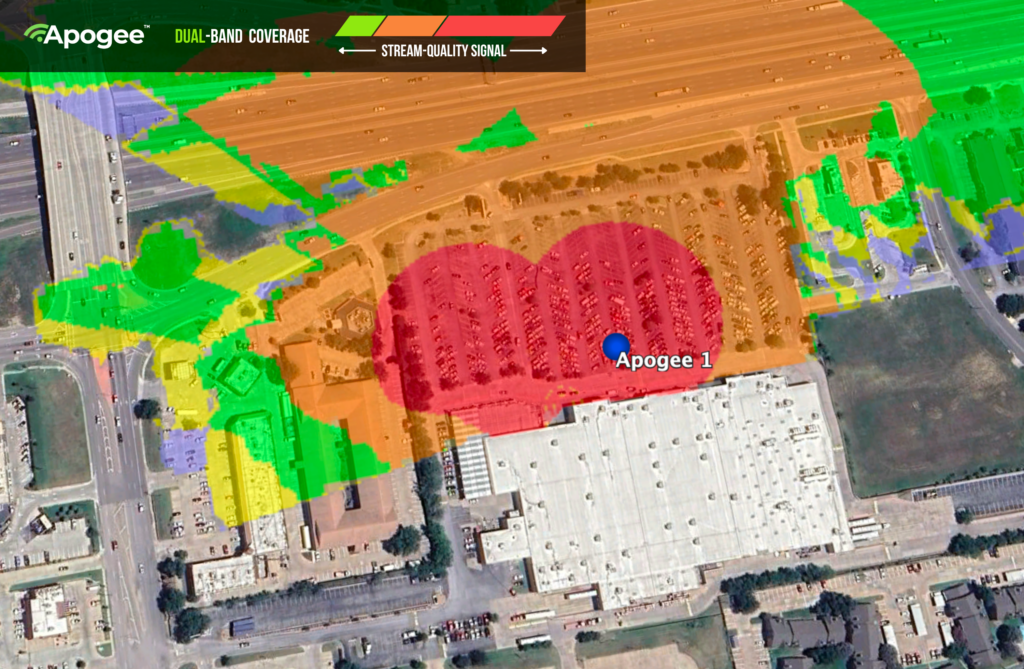
One Apogee extended curbside retail Wi-Fi across a 20-acre front lot. A second store used two antennas for its lot, gas pumps and tire center.
Published
An associate could leave the store ready to complete a curbside order, then lose the connection before reaching the customer. At the retailer in this case, outdoor Wi-Fi reached only about 50 feet beyond the entrance. Beyond that area, handheld point-of-sale devices dropped offline and customers waited.
The pickup process depended on a connection that did not reach enough of the parking lot. Curbside retail Wi-Fi needed to support the associate at the vehicle, wherever that vehicle was within the pickup zone.
Aura Wireless used one Apogee antenna to extend coverage across the store’s 20-acre front parking lot. Associates could take their devices to customers and complete transactions in the pickup area.
Giving curbside staff room to work
Order online, pick up in store had put more service activity outside the building. Staff still needed access to the systems used to handle an order, but the work no longer happened only at an indoor counter.
The old coverage boundary limited where that process could work. A handheld device losing its connection outside the entrance could hold up the customer interaction even when the associate and order were already in place.
The deployment extended the usable area from the immediate entrance to the front parking lot. The source describes associates greeting customers throughout the pickup zone and processing transactions without the coverage interruptions they had experienced before.
For the store, that made the parking area a more practical place to deliver the service it was already offering. Staff could organize the handoff around the pickup location, with network access available where the transaction needed to finish.
One store used one antenna. Another needed two.
The first installation used one Apogee antenna for a 20-acre front parking lot. The source also describes another store that used two Apogees to cover the main lot and both sides of the building, including the gas pumps and tire center.
Those are two different deployment examples within the same account. The one-antenna result belongs to the front-lot installation. The broader set of areas at the second store belongs to the two-antenna installation.
The distinction is useful when planning retail coverage. Acreage is part of the requirement, but so is the location of the working areas around a building. A front parking lot and areas on both sides of a store create different placement questions.
An Apogee antenna works with the access point or radio serving the devices. Its coverage contribution helps extend the two-way connection. The handheld still needs to send information back, and the network still needs to carry transaction data to the relevant systems.
Outdoor space became easier to use
The source describes smoother pickups and better support for outdoor selling areas after coverage expanded. Seasonal departments such as gardening, holiday trees and special-event sales could use connected tools in the spaces where those activities took place.
That is a practical extension of the curbside result. Once staff can transact outdoors, the store has more flexibility in how it uses existing space for service and sales.
The account does not give a measured increase in sales or a customer-satisfaction score. Its useful evidence is the change in where employees could work with connected devices: across the first store’s front lot and, at the second store, around the sides of the building as well.
Questions about curbside retail Wi-Fi
How far did the original outdoor Wi-Fi reach?
The first store’s outdoor Wi-Fi reached about 50 feet past the entrance before devices lost connectivity. One Apogee antenna extended coverage across that store’s 20-acre front parking lot.
Were the gas pumps and tire center covered by one antenna?
The gas pumps and tire center were part of a separate store example that used two Apogee antennas. That installation covered the main parking lot and both sides of the building.
What did employees do with the expanded coverage?
Employees used handheld point-of-sale devices to complete curbside transactions. The account also describes connected outdoor seasonal selling areas, including gardening, holiday trees and special-event sales.
Explore Aura’s outdoor wireless network solution and the large-format retail case. To assess the pickup lanes and outdoor departments at your store, talk with Aura Wireless about the site layout and devices your associates use.