case study | transportation
Rail Checkpoint Wi-Fi Across 35 Acres With One Apogee
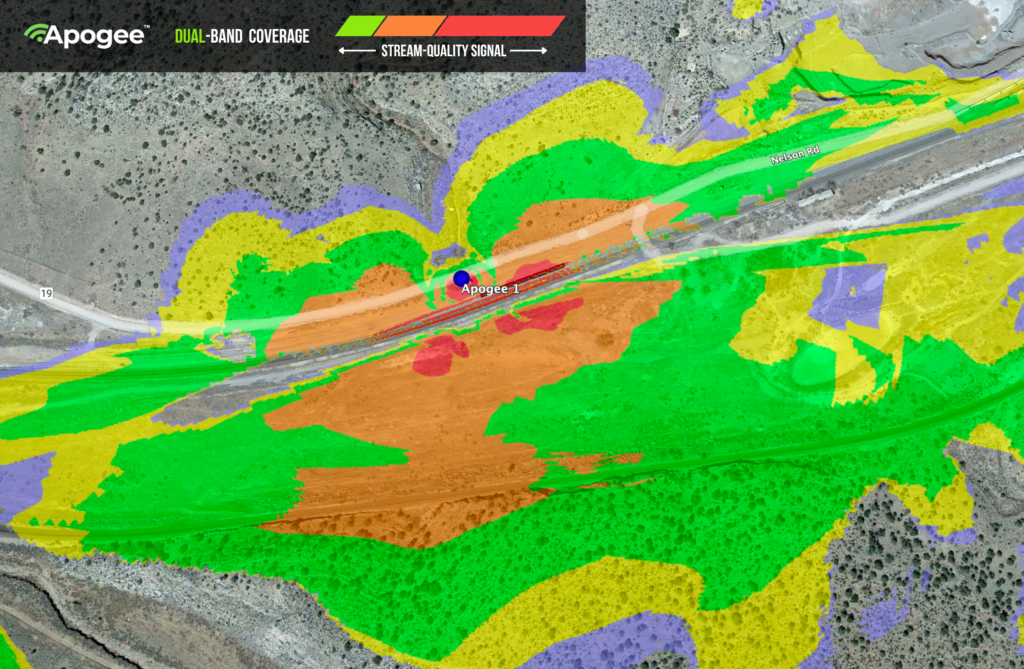
One Apogee extended rail checkpoint Wi-Fi across 35 acres so employees could upload data, receive assignments and stay connected in the field.
- Area covered
- 35 acres
- Antennas deployed
- 1
- Operating range
- -40 deg C rated
Published
At this rail checkpoint, a new assignment could mean a trip back to the main facility. Employees used handheld devices to upload data and receive work, but the connection did not reliably reach the place where they were doing that work.
The trips added walking and driving to a job that already covered a large area. Field information also had to wait until someone returned to a working connection. Improving rail checkpoint Wi-Fi meant making the checkpoint itself a place where employees could send updates and receive their next tasks.
Aura Wireless used one Apogee antenna to extend coverage across the 35-acre checkpoint. Employees could upload data on-site and stay in contact with operations while remaining in the field.
Bringing assignments out to the checkpoint
The operating problem was straightforward. Staff had mobile devices, but those devices were useful only where the network reached. A coverage gap turned an information exchange into a trip across the facility.
When an employee had to return for an assignment or synchronize a device, the journey became part of the workflow. It also separated supervisors from current information about checkpoint activity. The purpose of the deployment was to close that gap between the field and the main operation.
Once coverage reached the checkpoint, employees could receive assignments where they worked. Data uploads could happen there as well. Supervisors gained more timely visibility into the activity being reported, without waiting for the device to come back to the office.
How one Apogee supported rail checkpoint Wi-Fi
The deployment used one Apogee antenna for the checkpoint’s 35 acres. That is the antenna count and coverage area for this site. It does not describe every component in the network or set an equipment count for other rail properties.
The handheld’s return signal is an important part of the design. A worker may be able to receive a strong signal while the network struggles to hear the device’s lower-power reply. Apogee’s Asymmetric Gain helps address that receive-side challenge across the intended coverage area.
The antenna works with an access point or appropriate radio, which handles the wireless connection. The wider network still has to carry the data to the systems employees use. Antenna coverage and that upstream connection serve different purposes.
The checkpoint also put devices around structures, equipment and vehicles. Those conditions inform antenna placement and coverage planning. Steep Powered Filters reduce unwanted signals outside the operating band; they do not make locomotives or other obstacles disappear from the radio environment.
Less travel just to exchange information
The source reports that staff no longer needed the back-and-forth trips made specifically to synchronize devices or collect updates. Employees could communicate with control centers and report issues from the checkpoint, while supervisors had access to more current field information.
That matters for both daily coordination and the ability to raise a concern promptly. The account describes better communication and less travel across the facility. It does not supply an incident-rate comparison, so the safety value should be understood through those changes in working practice.
For the operations team, the result was a connected work area served by one Apogee antenna. Employees had a way to exchange information without leaving the checkpoint each time the next task depended on it.
Questions about the rail checkpoint deployment
Did one Apogee cover all 35 acres?
One Apogee antenna provided coverage across the 35-acre checkpoint described in the source. The result applies to this deployment. Another checkpoint needs its own review of layout, obstacles, device requirements and available network connections.
What could workers do from the checkpoint after deployment?
Workers could upload data, receive new assignments and communicate with operations from the checkpoint. The source reports that trips back to the main facility solely for device updates were no longer needed.
Does one antenna replace the rest of the network?
One Apogee antenna supplies the coverage contribution described here. An access point or radio still handles device connections, and the upstream network carries their data. The case does not establish a complete network equipment count.
Explore Aura’s outdoor wireless network solution and how Apogee works. To assess a remote work area, contact Aura Wireless with the site plan, employee routes and devices that need to connect.