case study | education
King City School Wi-Fi Extended Across 500 Acres
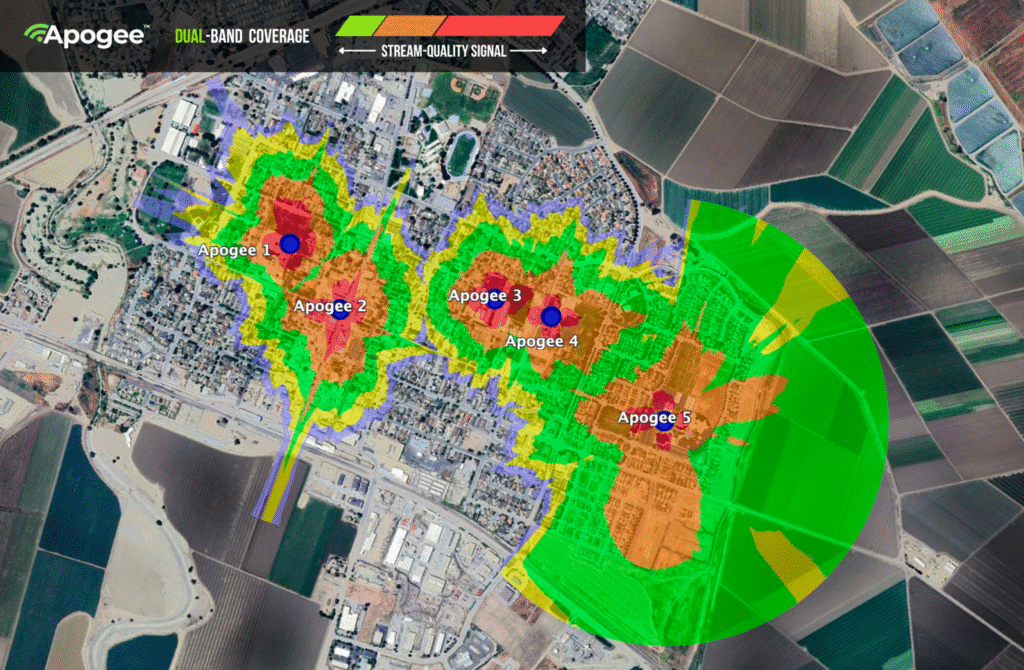
Five Apogee antennas extended King City school Wi-Fi across 500 acres during pandemic closures, supporting access from parking lots and school grounds.
Published
When classrooms closed during the COVID-19 pandemic, students without reliable home broadband lost an important connection to school. Assignments and lessons moved online, but access to a device did not solve the problem of reaching the network.
In King City, California, the school district worked with Aura Wireless to extend school Wi-Fi beyond the buildings. Five Apogee antennas at school locations provided coverage across 500 acres.
Students could connect from cars in school parking lots and from areas around the school grounds while keeping their distance from others. In some locations, the signal also reached parts of the immediate neighborhood. The project created more places where students could get online during the school closures.
Making the school connection available outdoors
The district faced an access problem during a period when students could not use classrooms in the usual way. A school network was valuable only if families could reach it from locations available to them.
The King City approach extended that shared connection outward from school sites. It gave students an option for reaching online schoolwork from parking areas and grounds, using the coverage provided through the district’s infrastructure.
The source contrasts that approach with managing large numbers of individual mobile hotspots and their data plans. It does not provide a district purchasing record or an itemized cost comparison. The practical distinction in this case is where the connection was supplied: through coverage based at school locations and available in surrounding outdoor areas.
That made the schools connection points during a period when their buildings could not serve students in the same way. Families had places to reach the network without needing to enter a classroom.
How five Apogees extended King City school Wi-Fi
The district deployed five Apogee antennas at strategic school locations. The reported coverage area was 500 acres, with access in parking lots, school grounds and some nearby off-campus areas.
Apogee’s receive-side design helps the network hear signals from lower-power client devices over the intended area. A student’s device must be able to send information back to the school network as well as receive its signal. That two-way connection matters for submitting work and using online learning services.
The antennas contributed coverage to the installed network. Access points and the upstream connection still handled device service and data transport. The case does not provide a complete inventory of those components.
The coverage result also needs to stay tied to its setting. Outdoor access around schools and some signal reaching nearby neighborhoods do not establish service inside every surrounding home. Buildings, device locations and the installation affect where a usable connection is available.
A place to connect during school closures
The deployment gave students access from school parking areas and grounds during the pandemic. The source describes a connection suitable for schoolwork, including streaming use in covered areas, with some reach into the immediate neighborhood.
For families, that offered a practical route to online learning where home connectivity was inadequate. For the district, the antennas extended the usefulness of infrastructure already associated with its school sites.
The project also pointed toward a longer-term role for outdoor school coverage. That possibility is separate from the documented result during closures. The source does not establish current coverage conditions, learning-outcome measurements or service to every household in King City.
Questions about the King City school deployment
Where could students connect during the school closures?
Students could connect from cars in school parking lots and throughout covered school grounds. The source also reports signal reaching the immediate neighborhood in some locations. It does not claim reliable indoor access in every nearby home.
How many antennas did the district use?
The King City school district used five Apogee antennas at school locations, providing a reported 500-acre coverage area. That result applies to the installation described in the historical case.
Does the case show measured savings over mobile hotspots?
The source describes a simpler shared-infrastructure approach but provides no itemized savings comparison with mobile hotspots. A district considering similar coverage should evaluate its own installation, service and support costs.
Read how Apogee works and Aura’s outdoor wireless network solution. To discuss outdoor access around schools, contact Aura Wireless with the locations students need to use, the existing network and the devices it must support.