wireless solutions
Wi-Fi and CBRS coverage from a shared antenna platform.
Some sites need Wi-Fi for one group of devices and private cellular for another. Apogee Converge gives those radio paths a shared antenna platform. Aura Wireless works with integration partners to evaluate that coverage approach within a complete network design, keeping the device requirements, radios and services for each network clear.
Start with the device fleets
Identify which devices use 5 GHz Wi-Fi and which need a compatible CBRS cellular connection. Map where each group works and what it sends. A shared antenna approach is relevant when the two coverage needs belong in the same site design.
Keep both network paths complete
Wi-Fi needs suitable access points and network services. Private cellular needs compatible radios and its cellular core. Backhaul carries traffic onward. Converge contributes antenna coverage to those paths; the integration plan supplies the complete service.
Evaluate the installation as a whole
A shared antenna platform can simplify how coverage equipment is arranged at a site. Compare the mounts, radio connections, power, backhaul and maintenance requirements of complete alternatives. The financial result depends on the actual installation and operating costs.
What Converge brings to the coverage plan
Aura’s Converge datasheet and product definitions describe simultaneous 5 GHz Wi-Fi and CBRS Band 48 operation, with dedicated RF connections for the two bands. The platform uses four antenna panels, with band and polarization configuration managed through Apogee Manager.
That makes the model relevant to a site evaluating both radio paths from a shared antenna structure. The connected Wi-Fi AP and cellular radio remain separate equipment choices. The radio-chain and panel allocation must suit the intended coverage and MIMO configuration; a panel configuration should not be treated as an automatic increase in user capacity.
Use the Converge product page for the model overview. For an actual bill of materials, have Aura and the integrator confirm the selected hardware revision, radios, interfaces, power and installation arrangement together.
Explore Apogee ConvergeThe network roles in a mixed deployment
Wi-Fi clients connect through the Wi-Fi access point and its network services. Compatible cellular devices connect through the CBRS radio and cellular core. Converge supplies the antenna contribution for the supported radio paths. Backhaul connects the local network to the systems and services it needs to reach.
This is a conceptual separation of responsibilities, not an installation wiring schedule. Keep device access, security, network operation and application performance in the full design. The shared antenna does not merge the two services into one universal connection for every device.
For a Wi-Fi-only requirement, compare the other Apogee models against the intended coverage shape. A mixed-network antenna design earns its place when the site has a supported need for both paths.
Compare the Apogee familyA live testbed at Paso Robles Municipal Airport
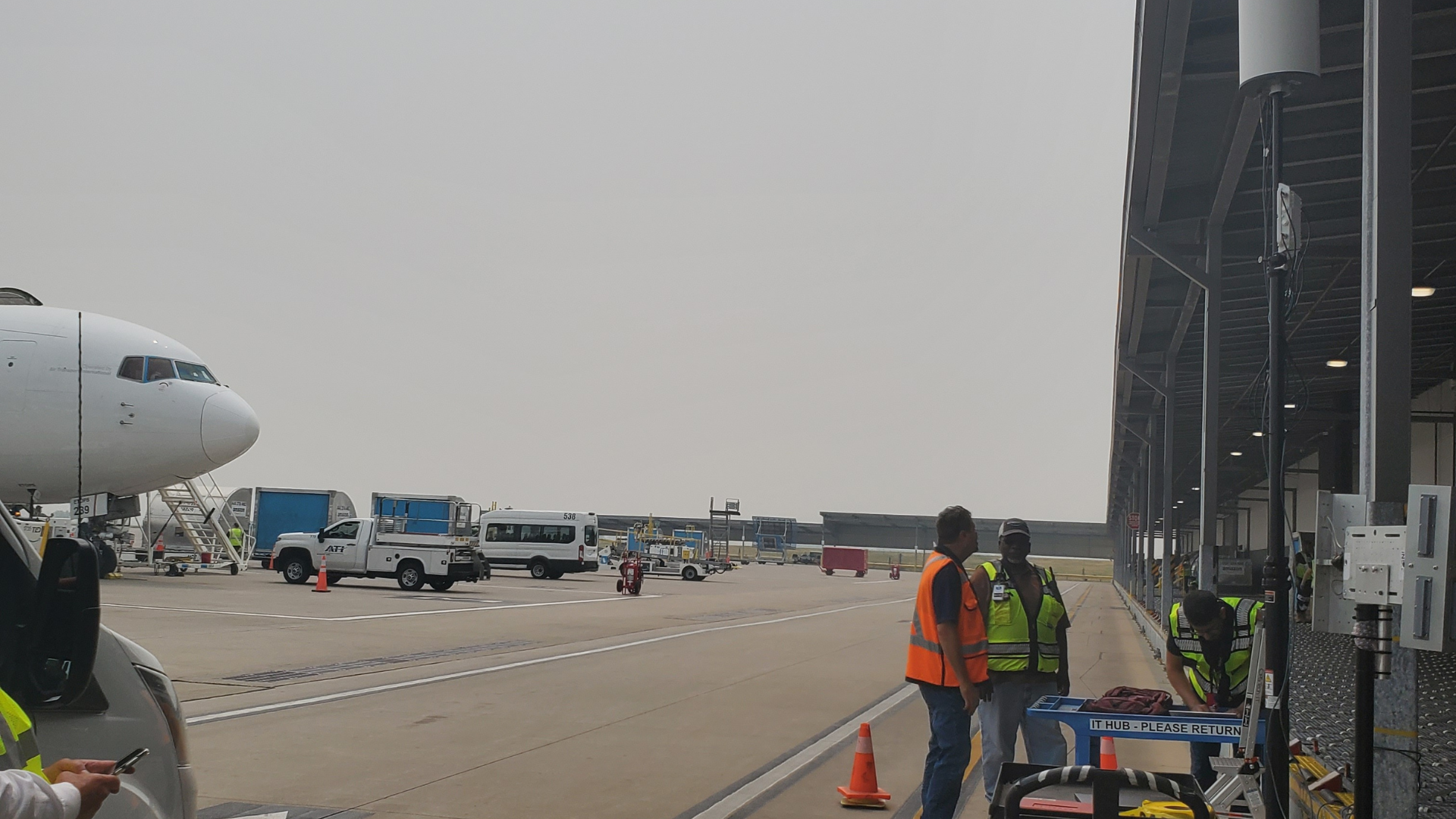
Aura worked with Cal Poly’s Noyce Advanced Wireless Lab and lead integrator Heddian on a private wireless testbed at Paso Robles Municipal Airport. The project used Apogee Converge for Wi-Fi and CBRS radio paths. The June 15, 2026 announcement reported full ramp coverage from a single node.
The result applies to the ramp, not the airport’s entire 1,300-acre footprint. Perimeter monitoring, aircraft data offloading, hangar tenant services and Cal Fire support were under validation at the time of the announcement. The testbed provides deployment evidence and a way to evaluate applications before extending services.
Read the Paso Robles testbed caseWi-Fi and CBRS questions
What networks does Apogee Converge support as an antenna platform?
The Converge datasheet and product definitions describe an antenna platform for 5 GHz Wi-Fi and CBRS Band 48, with dedicated RF connections for each band. Suitable access points and cellular radios provide the respective wireless services. Match the selected hardware and configuration to the devices and coverage requirements.
Is Apogee Converge a complete private cellular network?
Apogee Converge supplies an antenna platform. A private cellular deployment also requires compatible radios, core services, backhaul and network configuration. Wi-Fi uses its own access points and service configuration. Evaluate Converge as part of that complete architecture.
Can the two bands use the platform at the same time?
Aura’s Converge datasheet describes simultaneous 5 GHz Wi-Fi and CBRS operation. Band and polarization settings are configured through Apogee Manager. The radio connections and panel allocation must be designed for the intended coverage and supported MIMO arrangement.
What did the Paso Robles project establish?
The June 15, 2026 announcement reported single-node full ramp coverage at Paso Robles Municipal Airport using the Converge testbed. Heddian led integration with Cal Poly’s Noyce Advanced Wireless Lab and Aura involved. The stated airport applications were under validation, so ramp coverage and application completion remain separate results.
What information is needed to assess a mixed-network site?
Provide coverage zones for each network, client-device requirements and the proposed Wi-Fi and cellular radio models. Identify the cellular core, backhaul, operating responsibilities and mounting options. Aura and the integrator can then review antenna fit, hardware configuration and network requirements.
Continue your site assessment
Discuss Wi-Fi and CBRS for your site.
Share the coverage zones, devices and proposed Wi-Fi and cellular radios. Contact Aura about Converge’s role in the design, or find a partner for network integration.