case study | hospitality
Theme Park Wi-Fi for Guests and Staff With Ten Apogees
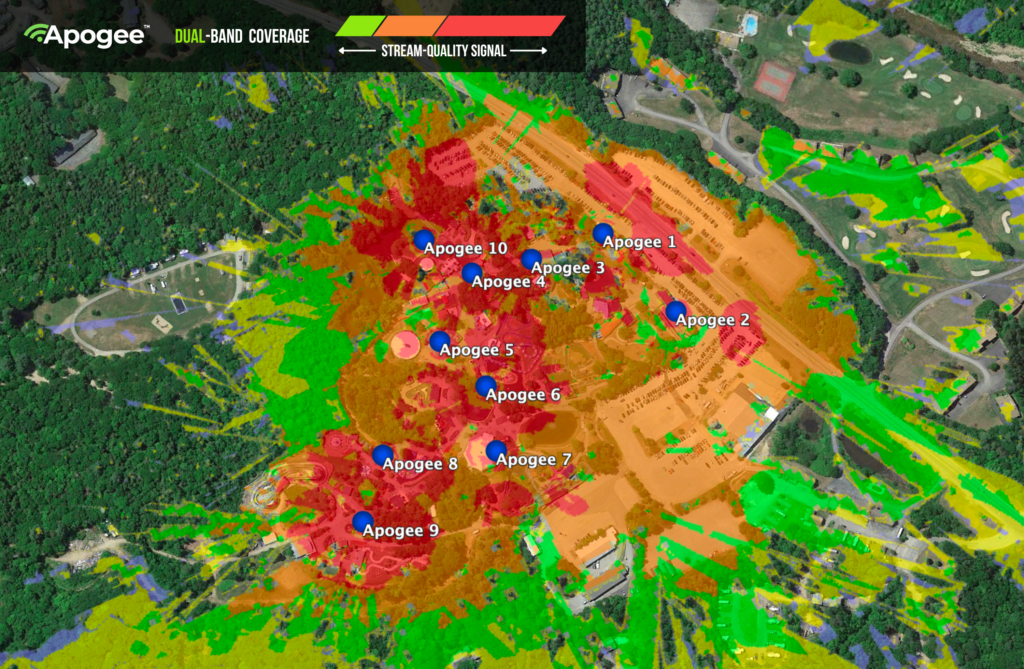
Ten Apogee antennas extended theme park Wi-Fi for point-of-sale devices, mobile maps, ticket wallets and staff working across the property.

Published
The park’s mobile tools were meant to help visitors use their day well. Maps, food ordering, reservations and ticket wallets all depended on a working connection. When Wi-Fi faded beyond the entrance, those tools became harder to use at the places where guests needed them.
Staff faced the same gaps through a different set of devices. Point-of-sale terminals dropped offline during busy periods, and employees spent time troubleshooting connections while trying to serve visitors.
The park deployed ten Apogee antennas to extend theme park Wi-Fi across its footprint. The source describes improved point-of-sale reliability, better access to the guest platform and broader coverage for mobile staff.
Connecting the places where service happens
A park spreads transactions and customer interactions across a large working area. Food, drink and merchandise sales take place near attractions. Temporary service points can move as events and seasonal activities change. Staff use tablets and handheld systems along the routes between those locations.
Before this deployment, the network did not consistently reach those spaces. A point-of-sale device could be in the right place to serve a guest and still lack the connection needed to finish the sale.
The park needed its coverage to follow that operating footprint. Extending access across the property gave both staff and guests a better chance to use the systems already built into the park experience.
Ten Apogees for the theme park Wi-Fi footprint
The installation used ten Apogee antennas. Steel structures, water features, foliage and long outdoor sightlines were all part of the radio environment. Crowds and moving devices added changing conditions throughout the day.
Apogee’s receive-side design helps the network hear lower-power client devices over the intended coverage area. A handheld needs to communicate back to the network, so receiving the network’s signal is only one part of the exchange.
The antennas contribute coverage alongside the access points or radios that serve devices. The wider network carries traffic to the park’s applications and services. These components need to be designed together for the actual locations and uses.
Apogee’s filtering reduces unwanted out-of-band signals. It does not remove the reflections caused by water or steel, and it does not eliminate every source of interference. Those conditions still need attention in antenna placement and field checks.
Antenna coverage also differs from guest capacity. The number of phones and operational devices using the network simultaneously remains a planning requirement for the access points and upstream services.
More reliable use of the park’s digital tools
The source reports point-of-sale terminals staying connected throughout the park, including during peak crowds. Employees could serve guests with fewer system interruptions and use mobile devices at pop-up service locations.
Guests gained more reliable access to maps, reservations, ride notifications, payment apps and ticket wallets. Those features could play a useful role during the visit instead of depending on a return to an area with better coverage.
The account also describes support for operational devices used in security, maintenance and scanning. That extends the value beyond visitor convenience to the staff keeping the property running.
The case reports shorter lines and faster checkouts without providing measured comparisons. The result it establishes most clearly is park-wide coverage using ten Apogee antennas and better access to the connected tools described in the story.
Questions about the theme park installation
How many Apogee antennas did the park install?
The theme park installed ten Apogee antennas. That is the antenna count in this case. The source does not publish a complete network equipment inventory or the park’s acreage.
Which guest services used the improved connection?
Guests used mobile maps, reservations, ride notifications, payment apps and ticket wallets. The source also identifies food ordering as part of the park’s mobile experience. The deployment supported access to those services across the covered property.
Does this prove that any seasonal event needs no extra equipment?
This case does not establish the equipment needs of every future event. A new event’s location, device count and traffic requirements should be checked against the installed coverage and network capacity before relying on the existing design.
See the California waterpark case and Aura’s outdoor wireless network overview. To plan around rides, service points and staff routes, contact Aura Wireless with your site layout and the digital tools the park needs to support.