case study | transportation
Paso Robles Airport Private Wireless Testbed With Apogee
The Paso Robles Airport private wireless testbed used Apogee Converge for ramp coverage while airport applications continued through validation.
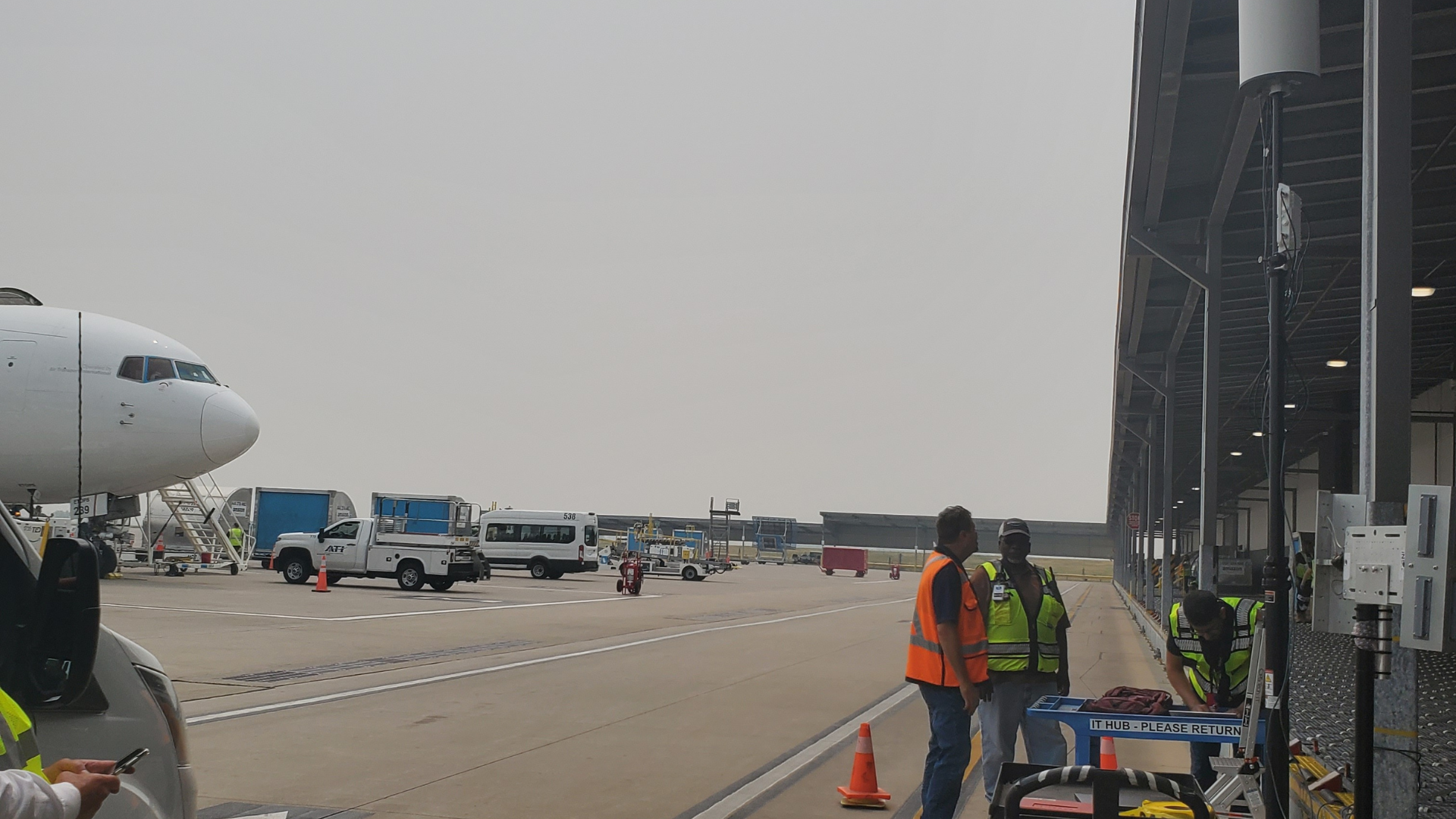
- Nodes deployed
- 1
- Networks served
- 2 Wi-Fi plus CBRS
- Private LTE
- Band 48
- Ramp coverage
- Full
Published
Paso Robles Municipal Airport needed connectivity in areas where conventional infrastructure was costly to install. The airport supports aerial firefighting, highway patrol aviation and general aviation, creating several different needs for communication across an outdoor operating site.
Aura Wireless worked with Cal Poly’s Noyce Advanced Wireless Lab and lead integrator Heddian on a live private wireless testbed. The project used Apogee Converge as an antenna platform for Wi-Fi and Citizens Broadband Radio Service, or CBRS.
The June 15, 2026 announcement reported full ramp coverage from a single node. That result applies to the ramp. The airport’s total footprint of 1,300 acres provides context for the project, without establishing coverage of the entire property from that node.
Starting with the areas that needed a connection
An airport includes distinct working spaces, with different devices and operating requirements. A ramp coverage result answers one part of the connectivity question. It does not settle what equipment or service is needed at every hangar, boundary or other part of the airport.
At Paso Robles, the team established a testbed where coverage and potential applications could be evaluated in the field. That gave the project a practical basis for assessing how private wireless might support airport activity.
Heddian led the integration work, with Cal Poly’s Noyce Advanced Wireless Lab and Aura participating in the project. Their roles brought network integration, research and antenna technology into the same deployment.
Apogee Converge’s role in the airport testbed
Apogee Converge provides an antenna platform for Wi-Fi and CBRS radio paths. Its coverage contribution sits alongside the radios and network services required for each connection type.
The access point handles Wi-Fi device connections. Private cellular service requires its own radio and network components, including the core that manages cellular service. Backhaul carries traffic from the local network to its destination. An antenna does not supply all of those functions by itself.
The source describes Apogee’s Asymmetric Gain as part of the deployment. The receive-side design helps address the challenge of hearing lower-power devices over the intended area. The complete system still has to support the actual devices and applications being tested.
For a similar airport project, the starting questions are therefore concrete: which areas need service, which devices will use Wi-Fi or cellular connections, and what information has to move through the network? Those requirements guide the coverage design and the supporting infrastructure.
What the team was evaluating
At the time of the announcement, the testbed was evaluating perimeter security monitoring, aircraft data offloading, hangar tenant wireless services and connectivity supporting Cal Fire flight operations.
Those were use cases under validation. The reported ramp coverage provided a place to test them, but did not establish that every service was already operational. Keeping those stages clear helps an airport team distinguish a demonstrated coverage result from an application still being assessed.
Cal Poly engineering students participated from rooftop installation through live RF validation. The work connected their studies with the practical steps of installing and checking a wireless system. It also informed a broader private wireless strategy for the City of Paso Robles.
Questions about the Paso Robles deployment
Did one node cover all 1,300 airport acres?
The announcement reports full ramp coverage from a single node. The 1,300 acres describe the airport’s total footprint. The source does not establish that the node covered the entire airport.
Is Apogee Converge a complete private 5G network?
Apogee Converge is an antenna platform used with Wi-Fi and CBRS radio paths. A complete private cellular network also needs suitable radios, core services, backhaul and configuration. The antenna’s coverage role should be evaluated within that complete design.
Were the proposed airport applications already complete?
Perimeter monitoring, aircraft data offloading, tenant services and Cal Fire support were under validation in the June 15, 2026 announcement. The case should not be read as confirmation that all four services were fully deployed.
Read the original project announcement and explore Apogee Converge. To assess a mixed Wi-Fi and private cellular project, contact Aura Wireless with the intended coverage zones, device requirements and network design.