
5 Apogee 360s
500 acres
Five Antennas. 500 Acres. Thousands Reconnected.
King City schools chose lasting infrastructure over temporary fixes — and brought their community closer together.
When schools closed during the COVID-19 pandemic, the crisis went far beyond empty classrooms. Across the country, millions of students suddenly lost their only reliable connection to teachers, assignments, and classmates. For families without home broadband, school doors weren’t the only thing that locked shut — so did access to education itself.
School Districts scrambled. We all did.
Thousands of mobile hotspots were purchased and handed out.
On paper, it looked like a solution. In reality, it was an expensive, short-term fix. Devices overheated, data plans ballooned budgets, and too often the hotspots were used for everything except connecting to school networks.
The result? The digital divide grew wider, right when students needed connection most.
In King City, California, the school district saw the challenge differently. They recognized that solving connectivity for students wasn’t just about making it through the pandemic. It was about building digital infrastructure that could serve the community long after.
From quick fixes to lasting solutions
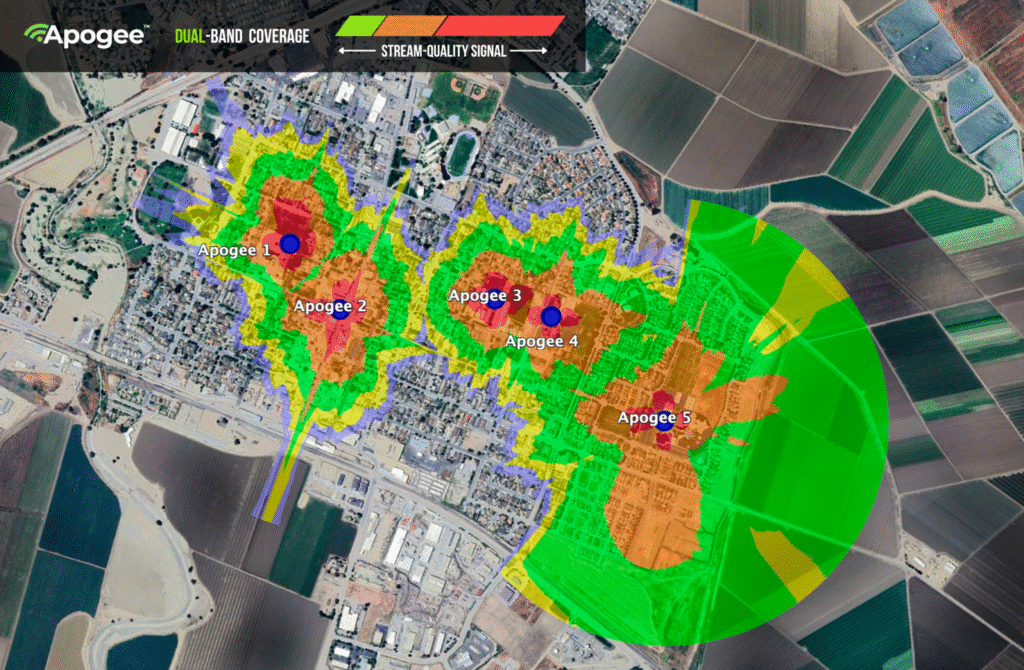
Instead of chasing thousands of hotspots, King City invested in a smarter approach: community-wide coverage. Working with Aura Wireless, the district deployed just five Apogee antennas at strategic school locations. In doing so, they lit up 500 acres of high-quality Wi-Fi coverage across their community.
The difference was striking. Powered by Aura’s patented Asymmetric Gain™ technology, the Apogee antennas extended school Wi-Fi far beyond the campus walls. Students could connect from from cars parked in school lots and throughout the school grounds while keeping safe distance. In some cases the streaming quality signal extended off campus into the immediate neighborhood.
What had once been a signal locked inside classrooms became a lifeline woven through neighborhoods.
Smarter, simpler, stronger
Compared to managing thousands of hotspots, King City’s approach was dramatically more cost-effective and easier to manage. One deployment meant:
Lower costs — a single infrastructure investment instead of recurring device and data plan expenses.
Simpler management — no chasing down devices, no spotty compliance, no headaches.
Stronger coverage — stream-quality signal that could support real learning, not just patchy connections.
The Apogee deployment also showed families what’s possible when connectivity is treated as a shared resource, not a personal gadget. Parents didn’t have to juggle logins or troubleshoot hotspots. Students didn’t have to worry if their device would hold a signal long enough to submit an assignment.
Beyond the pandemic: building equity
King City’s decision wasn’t just about solving a temporary crisis. By investing in broader coverage, the district took a long-term step toward narrowing the digital divide in their community.
Access to reliable Wi-Fi is no longer optional. It’s the foundation for education, healthcare, commerce, and civic participation. By placing connectivity where students live, not just where they learn, King City created a model that other districts can follow.
Ian Watson, VP of Engineering and Operations at Aura Wireless, reflected on the significance of the project:
“King City understood something fundamental: Wi-Fi isn’t just about getting students online today — it’s about shaping opportunity for tomorrow. By deploying just five Apogee antennas, they showed how schools can deliver more than education; they can deliver equity. This is what the Science of Scale looks like in action — smarter coverage, stronger communities, and a foundation for the future.”
A blueprint for the future
The story of King City is more than a local success — it’s a blueprint. Across the country, schools continue to wrestle with the high costs and logistical hurdles of student connectivity. King City proved that there’s another way.
By rethinking Wi-Fi as community infrastructure, they not only ensured students could keep learning during a crisis, but also positioned their city to thrive beyond it. From agriculture to small businesses to civic services, the ripple effects of reliable connectivity will extend far beyond the classroom.
When the pandemic exposed the gaps in our countries digital infrastructure, most districts reached for quick fixes. King City reached further. They proved that with the right technology, the right partners, and the right vision, a handful of antennas could do what thousands of hotspots could not: connect students, families, and communities to a stronger future.